the making
the process
I came to guitar building the long way round. Thirty-five years as a working musician, a degree in jazz performance, and more than fifteen years repairing fretted instruments — guitars, mandolins, banjos, ukuleles — gave me a deep and particular relationship with these objects long before I started making them. I know how they feel in the hands, how they respond to touch, and what it means to rely on one night after night. That knowledge is in every instrument I build.
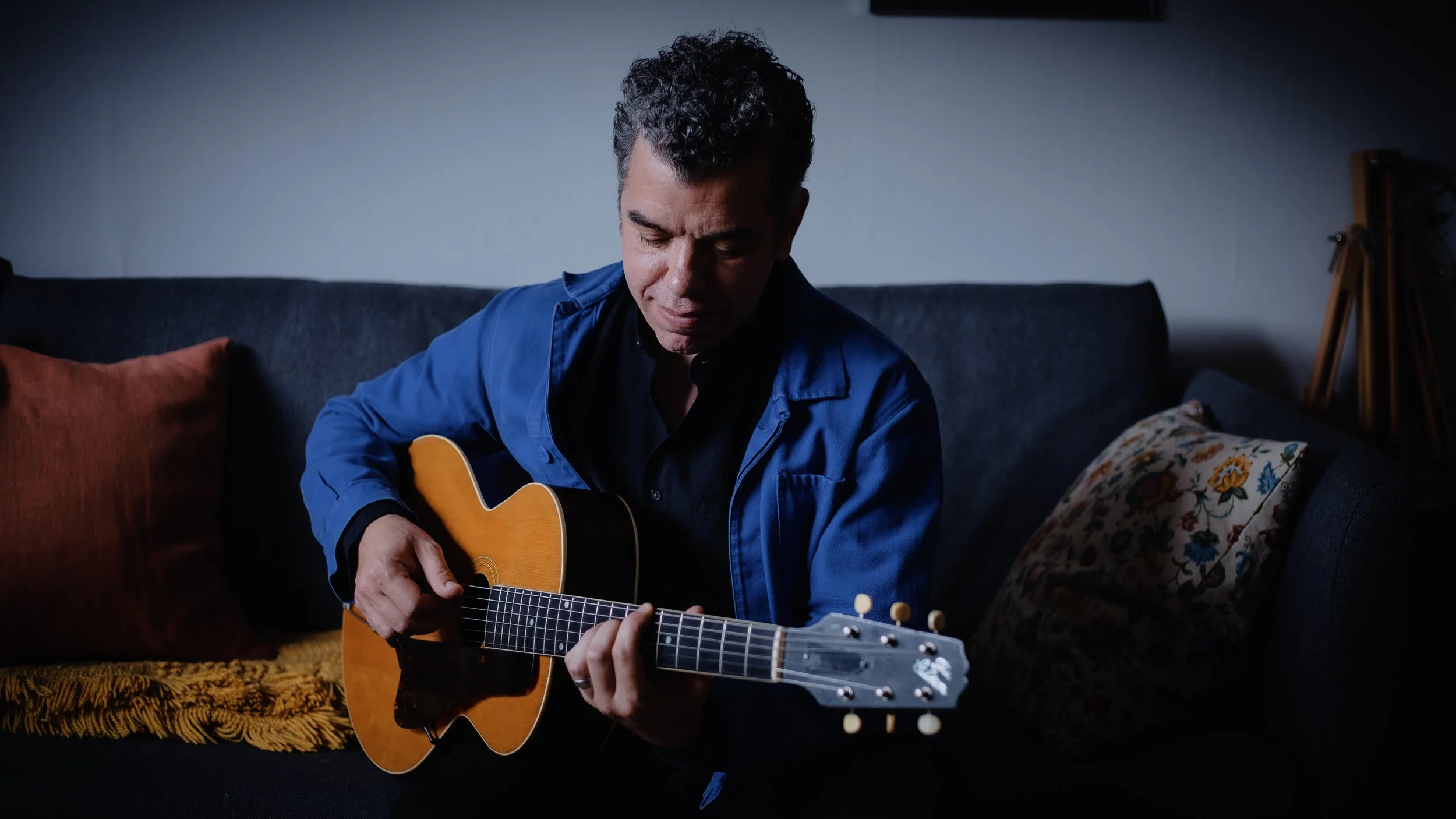
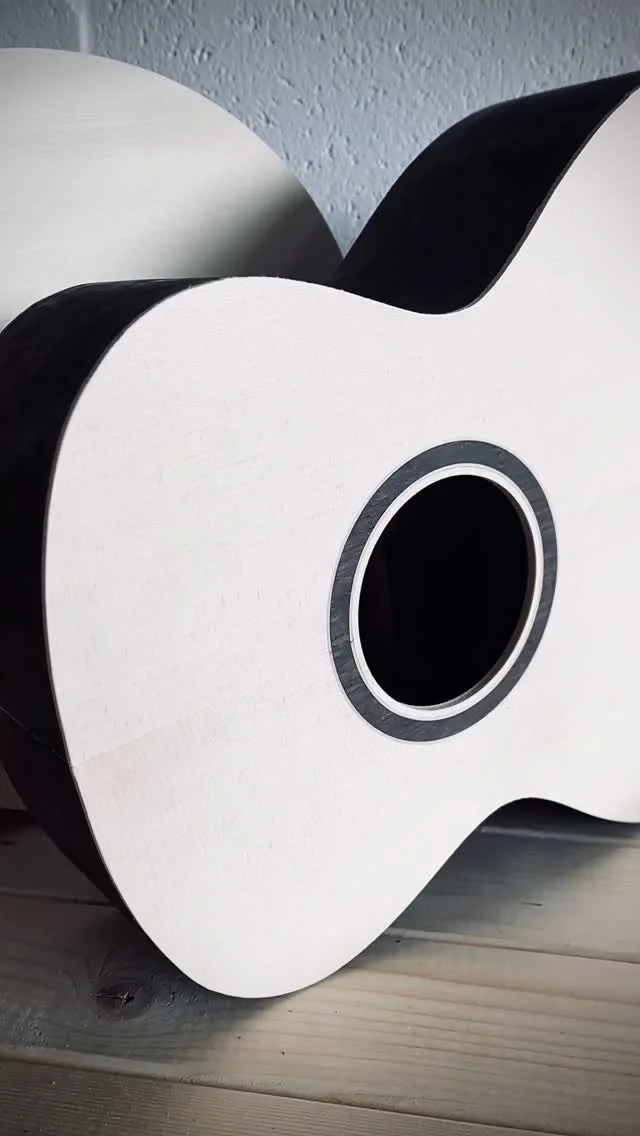
I build my own designs — the Dáda and the Ló — both inspired by small-bodied guitars of the early twentieth century. The choice of smaller instruments is partly historical, partly personal. I'm drawn to their character and their intimacy, and I build guitars I would want to play myself.
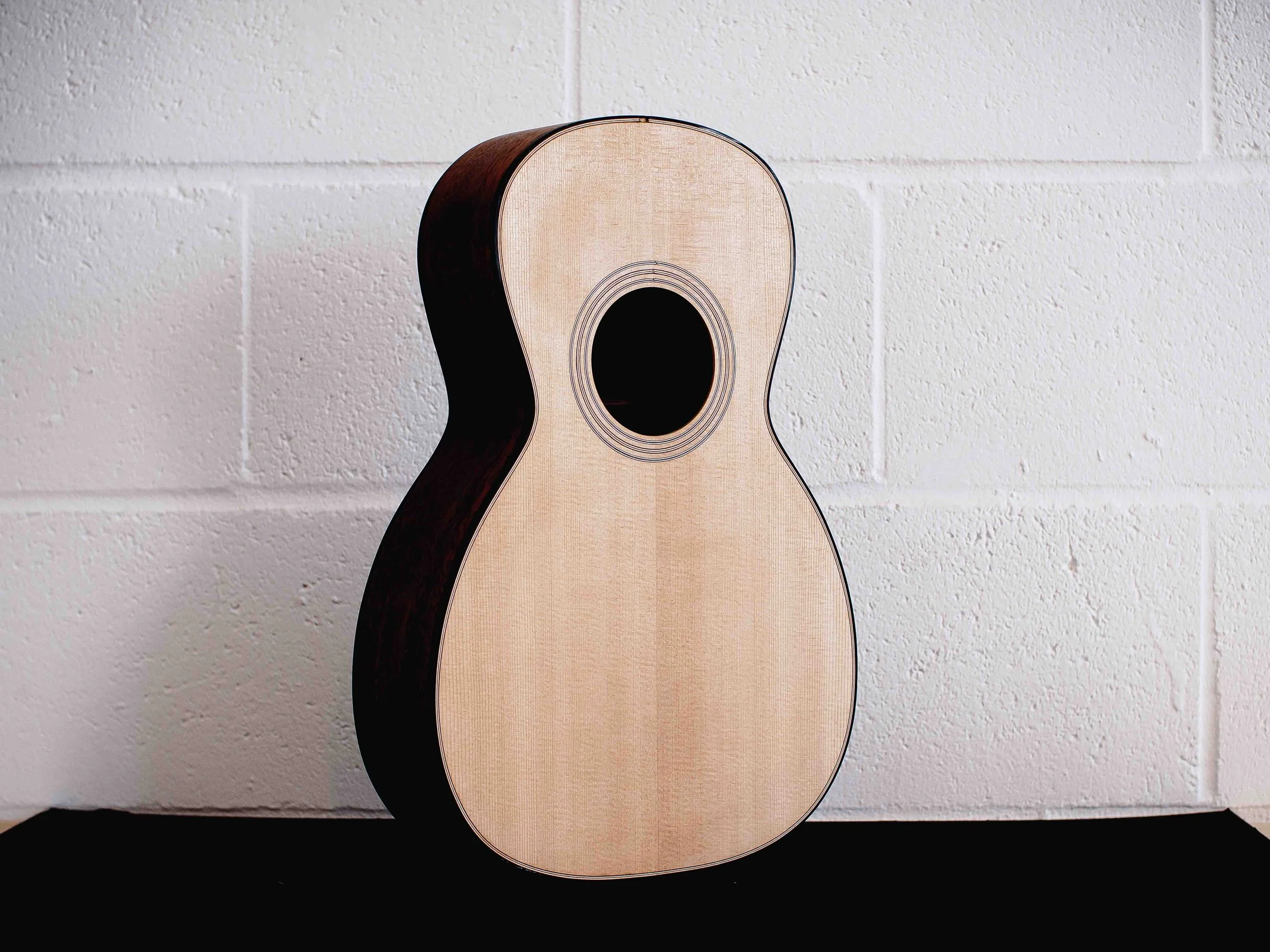
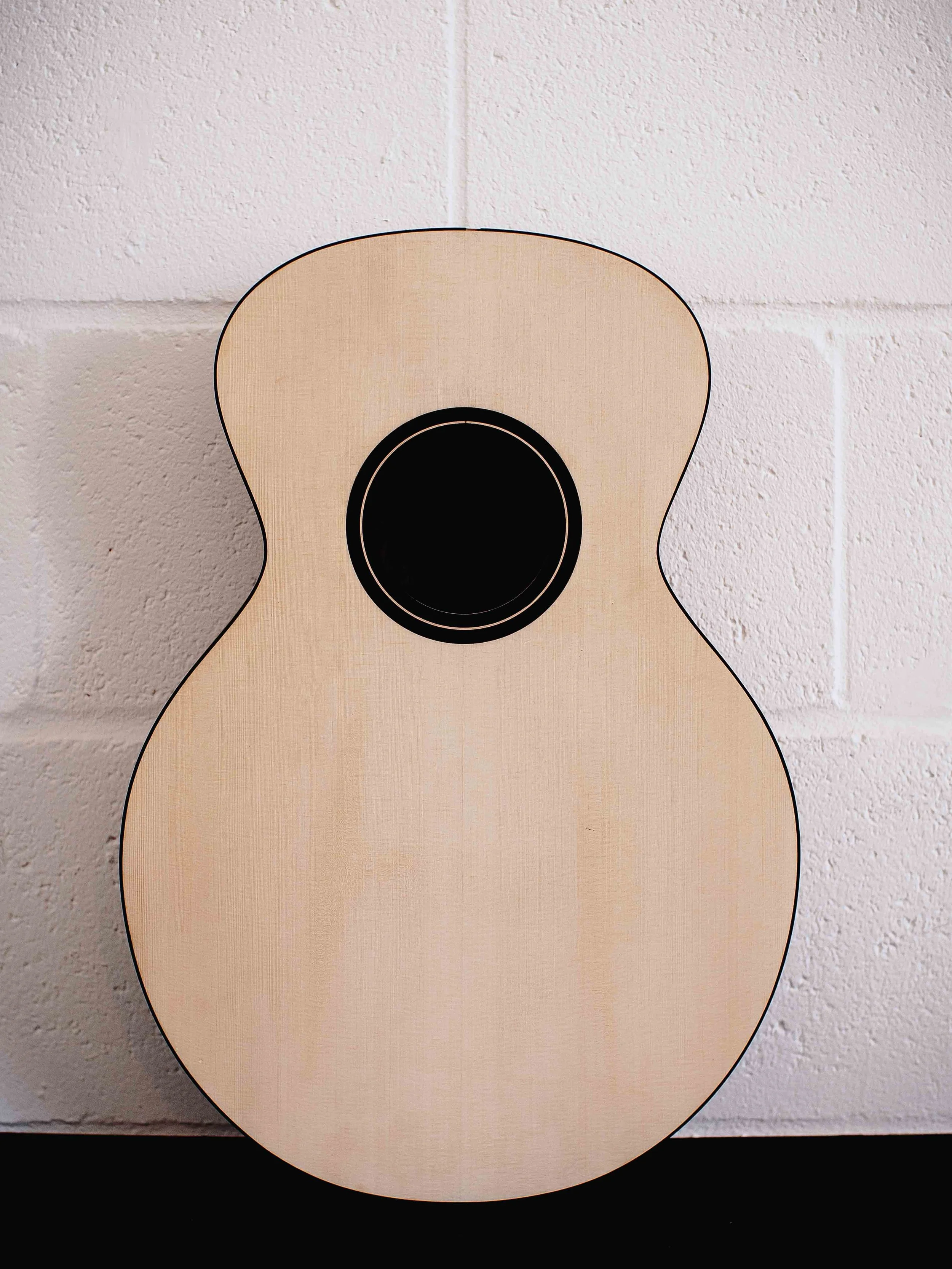
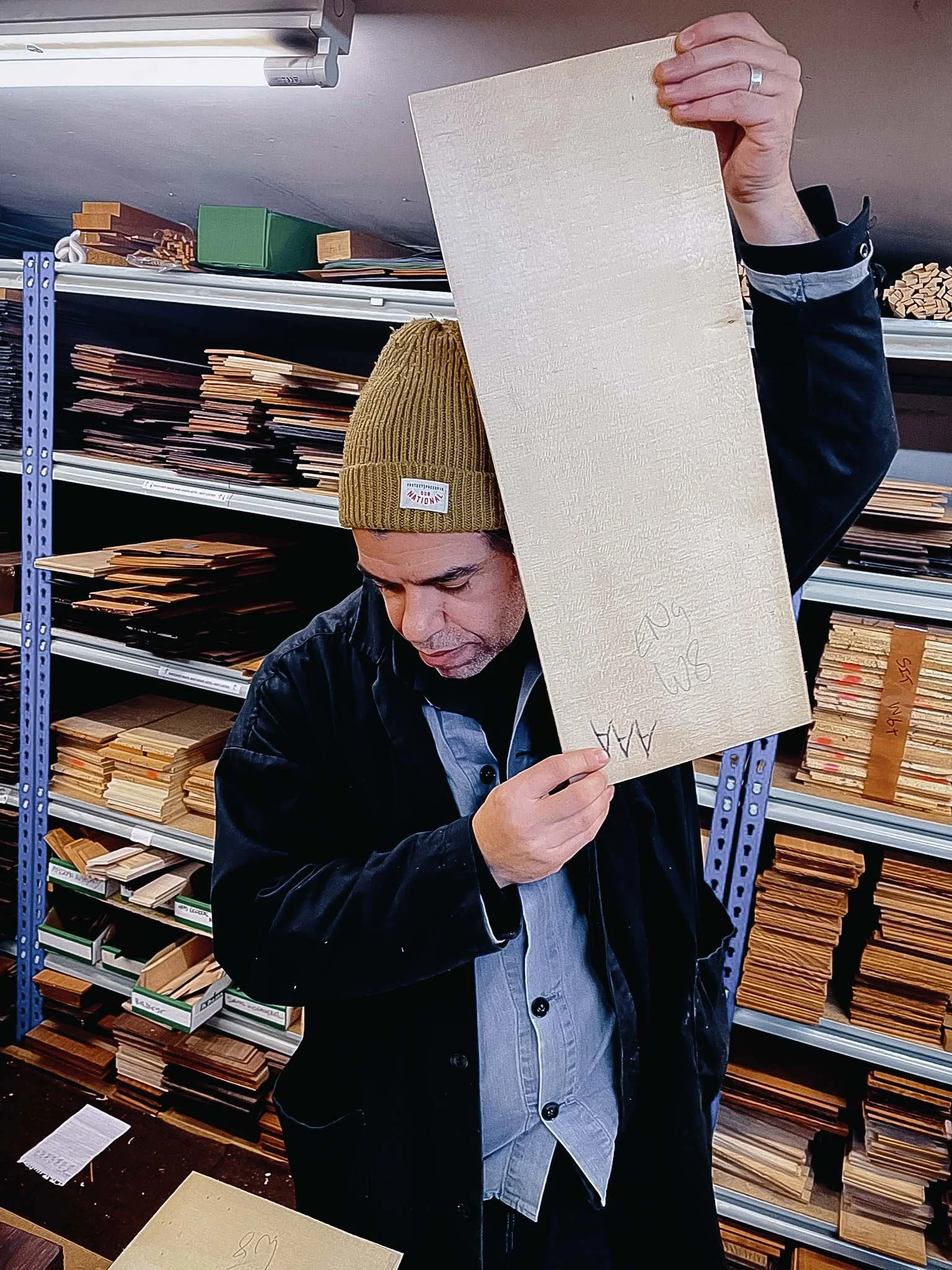
Wood selection is where the process begins in earnest, and it's something I do together with the player. We visit specialist tonewood suppliers and choose the timber as a pair — feeling the grain, reading the figure, imagining the sound. It's an important moment. The wood is the instrument before it's an instrument.
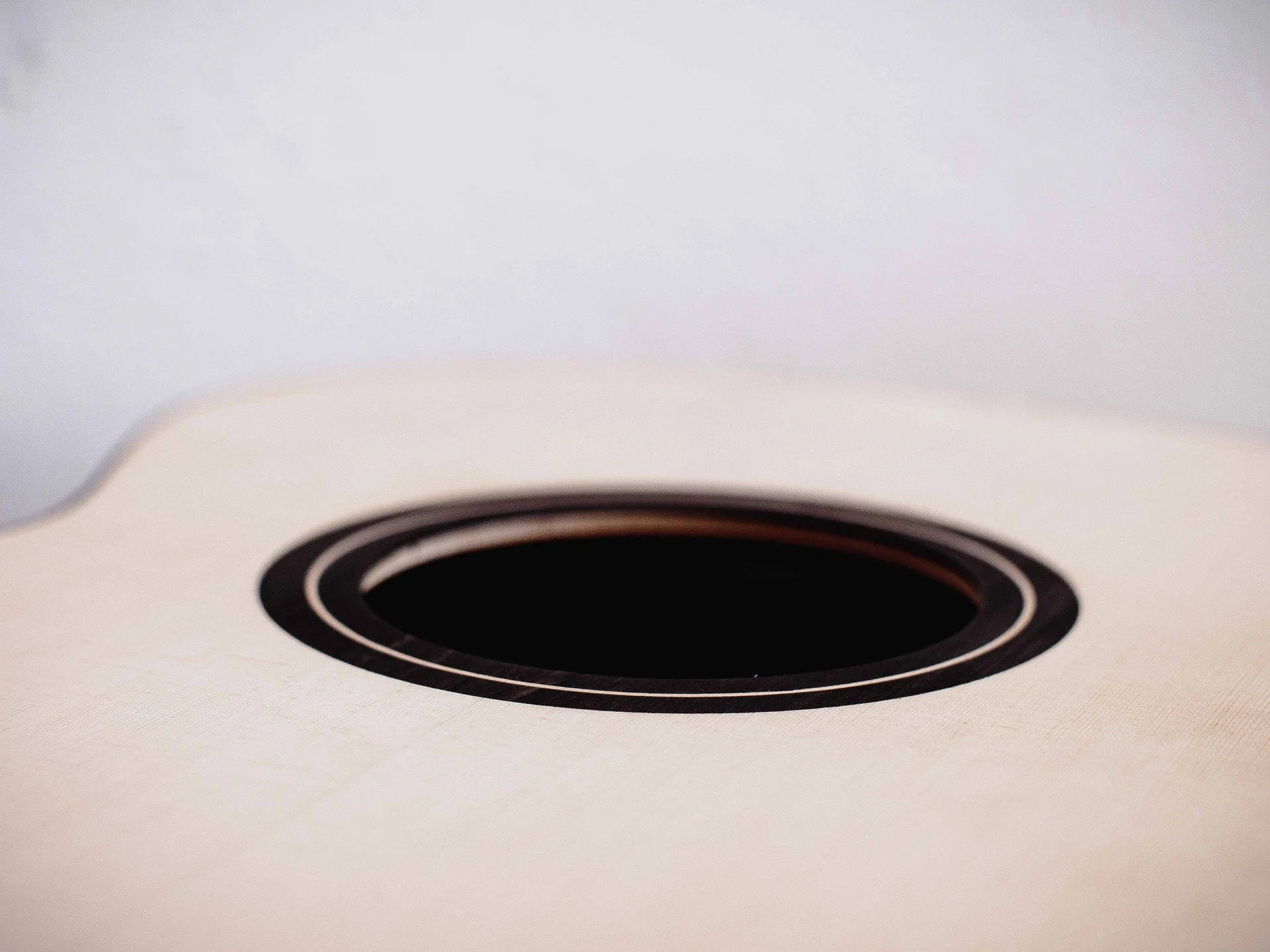
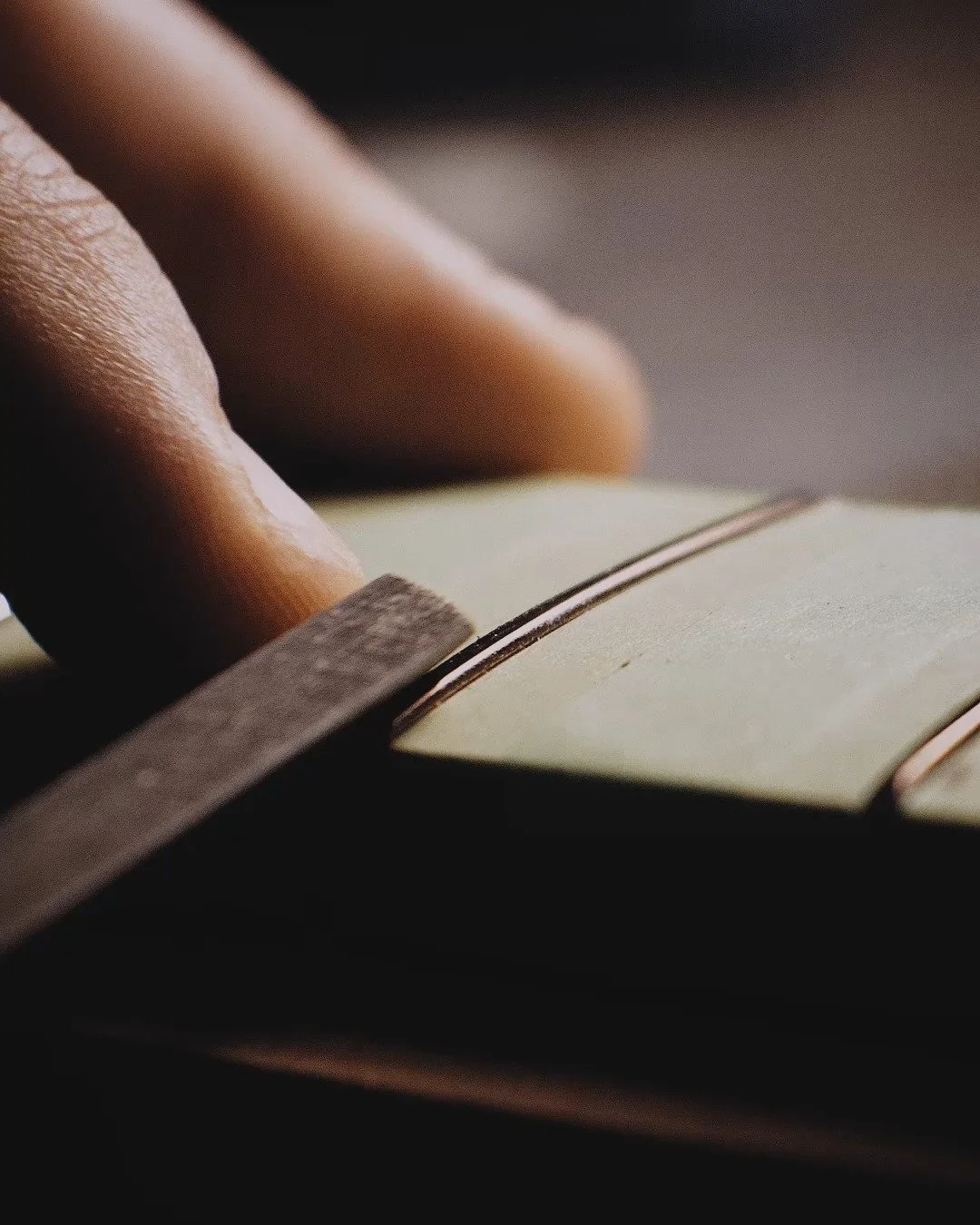
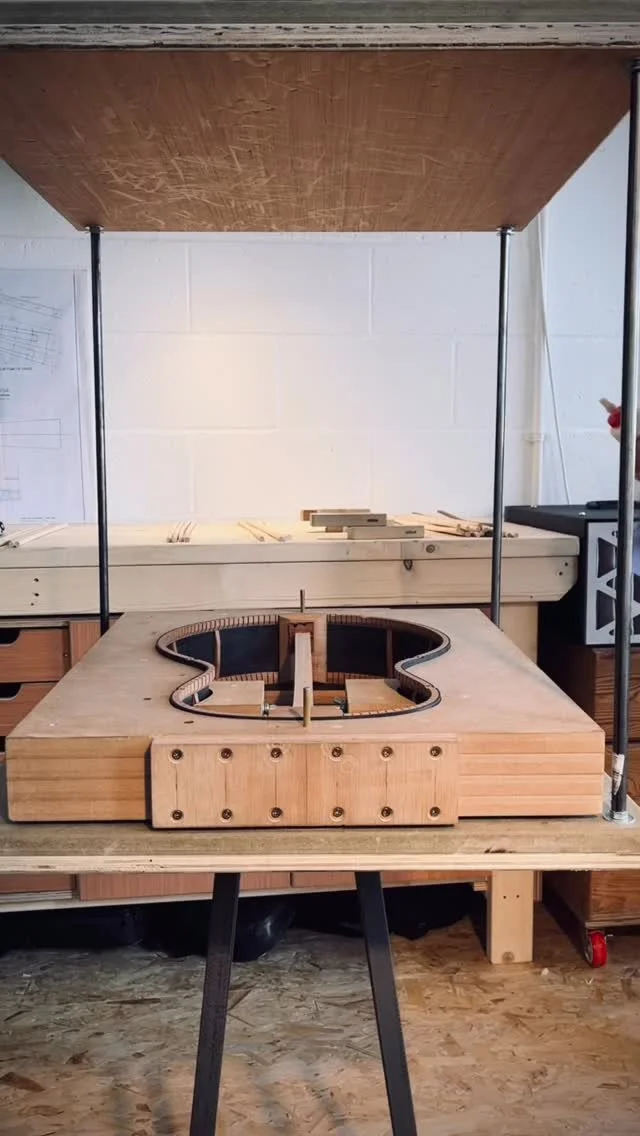
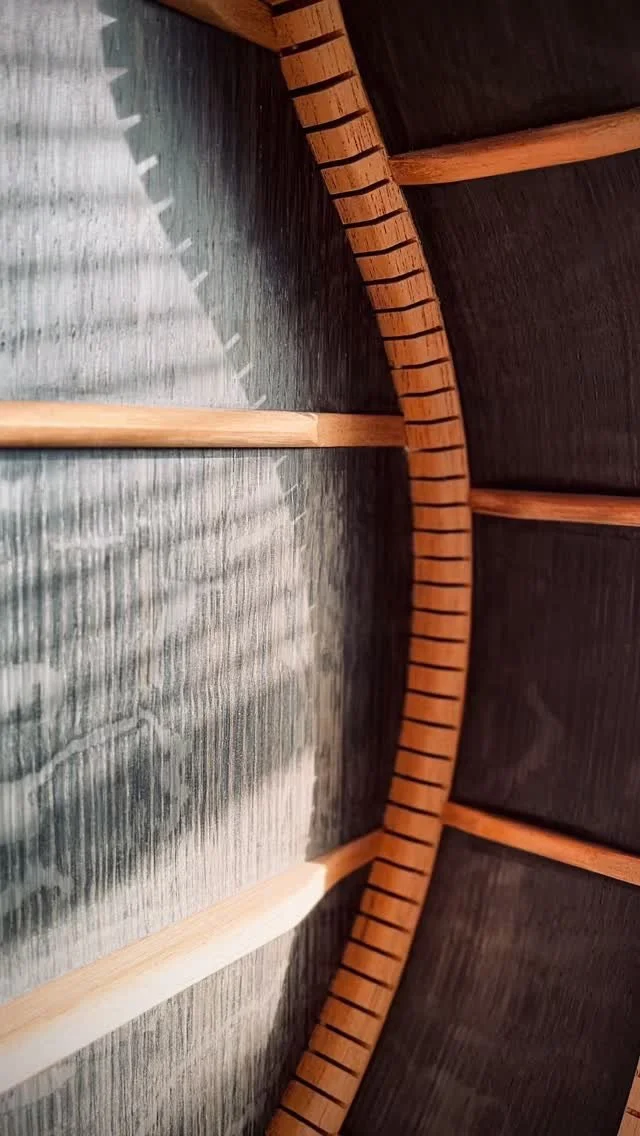
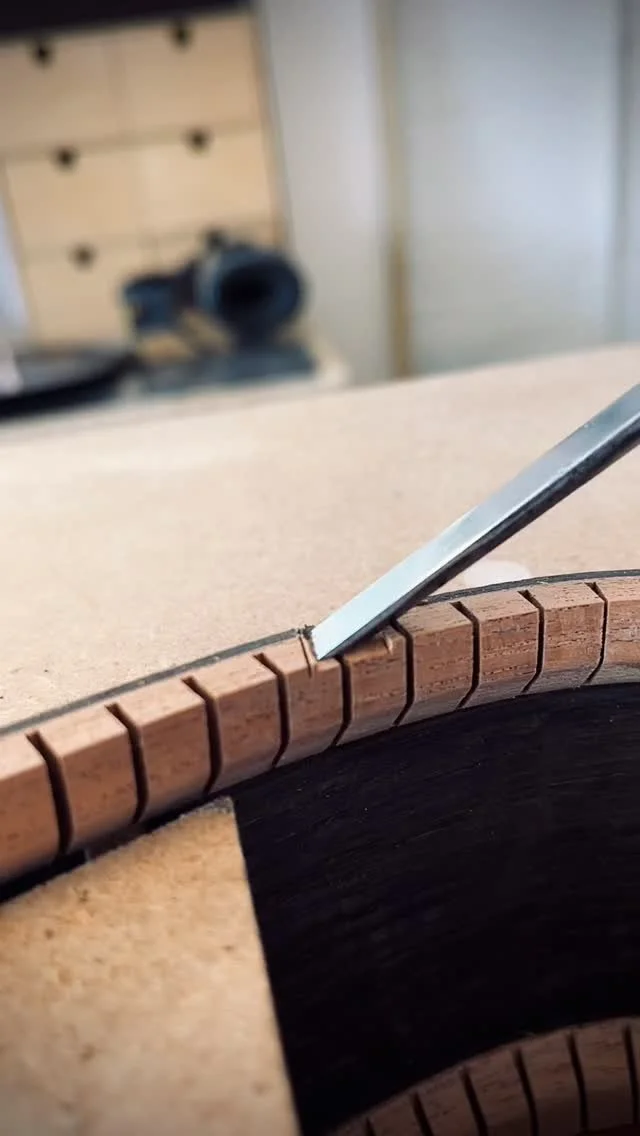
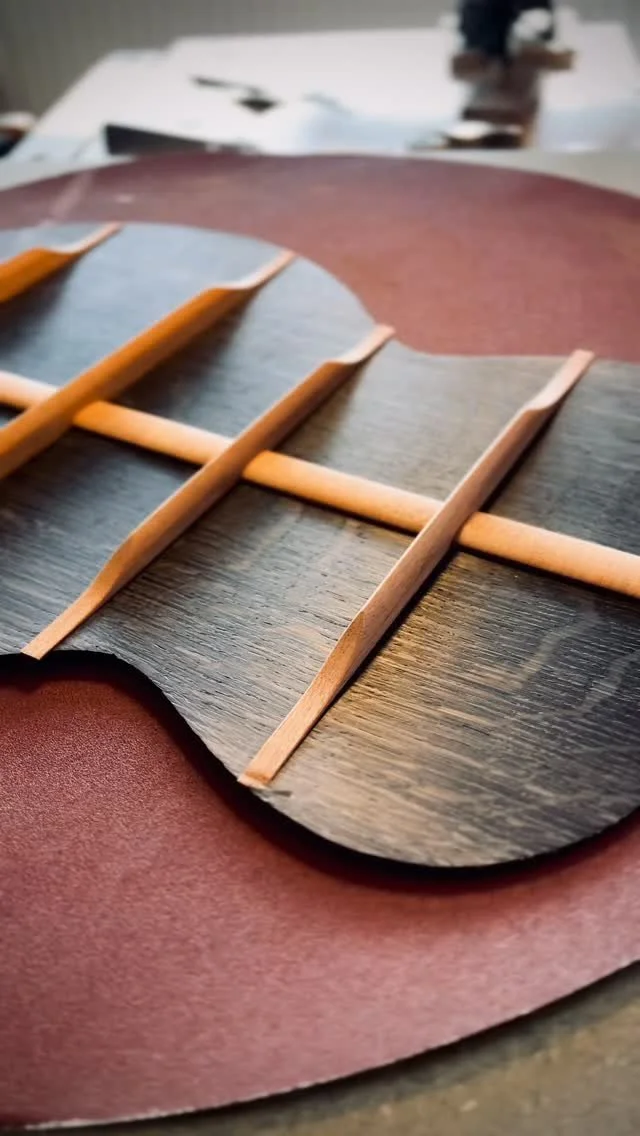
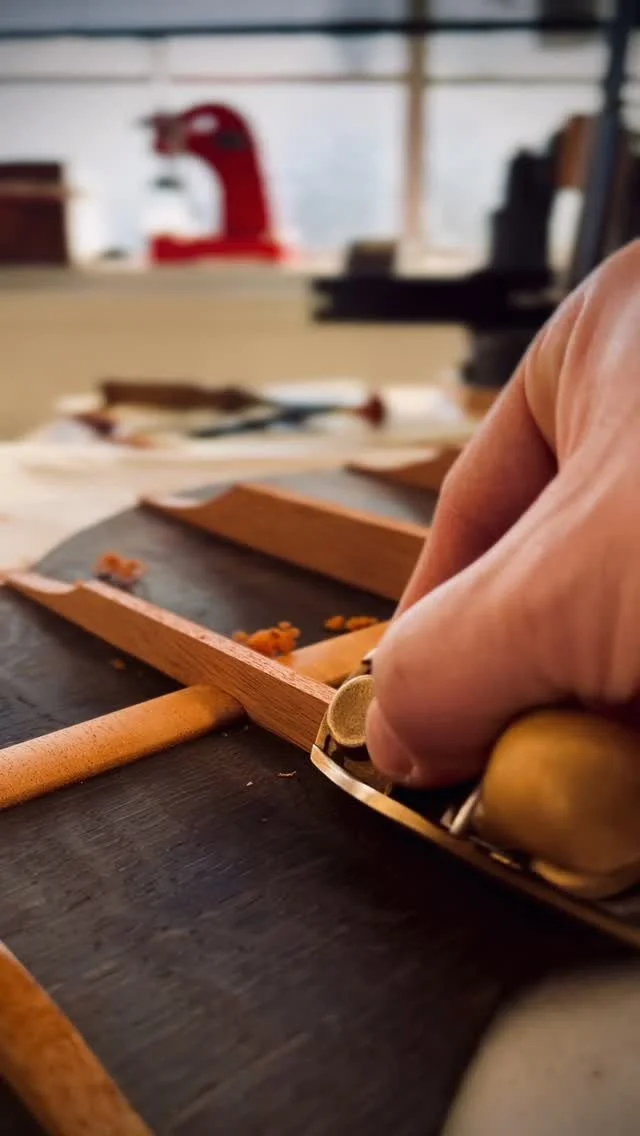
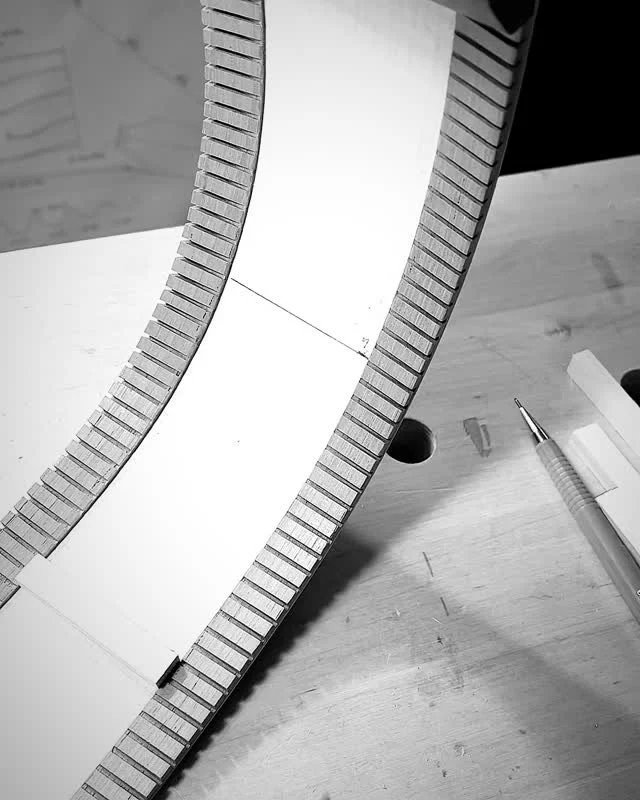
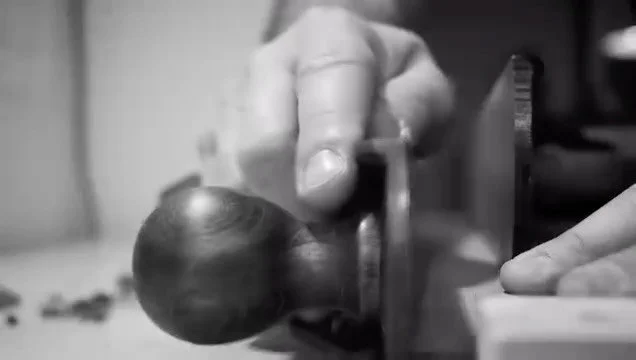
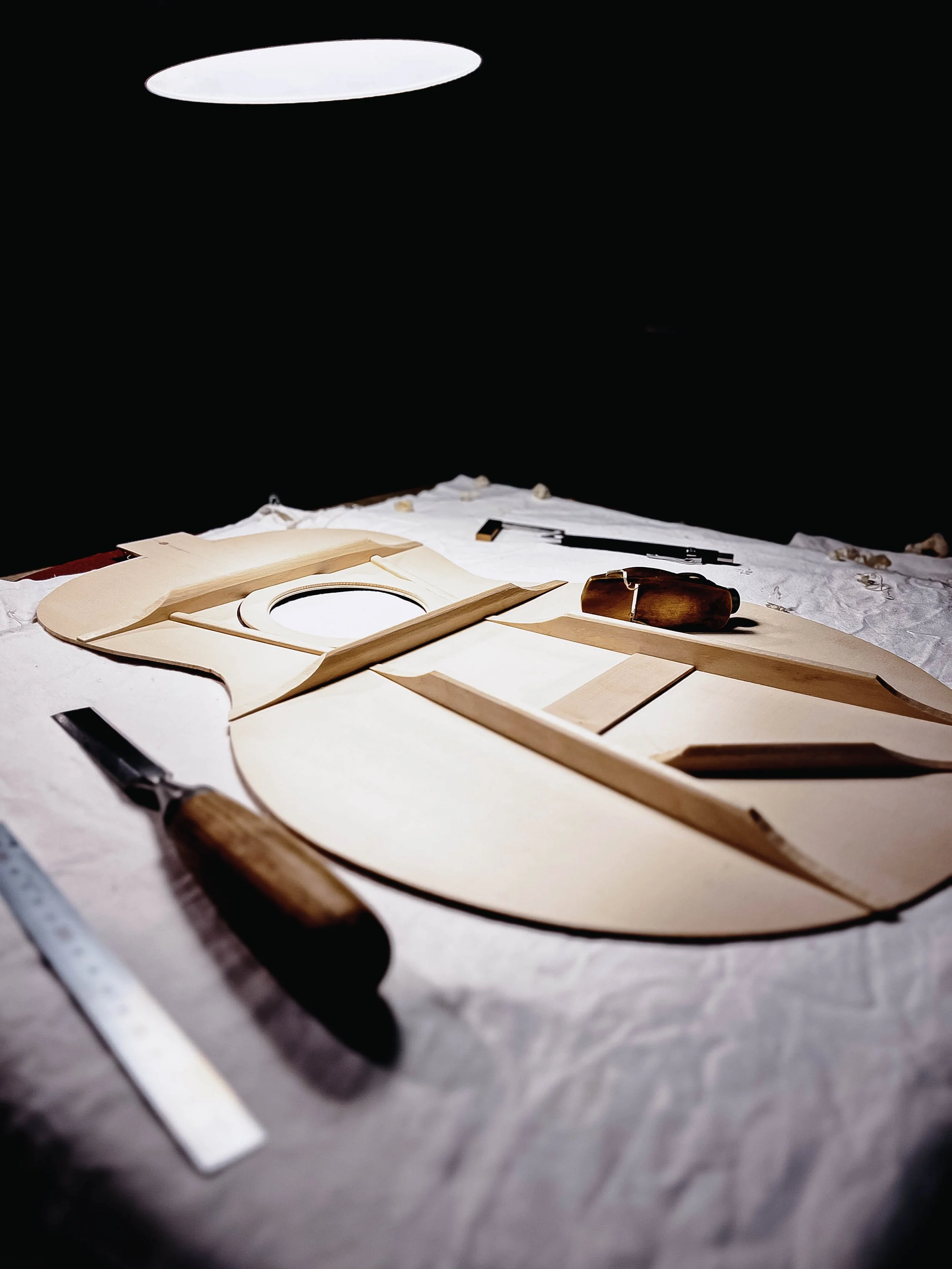
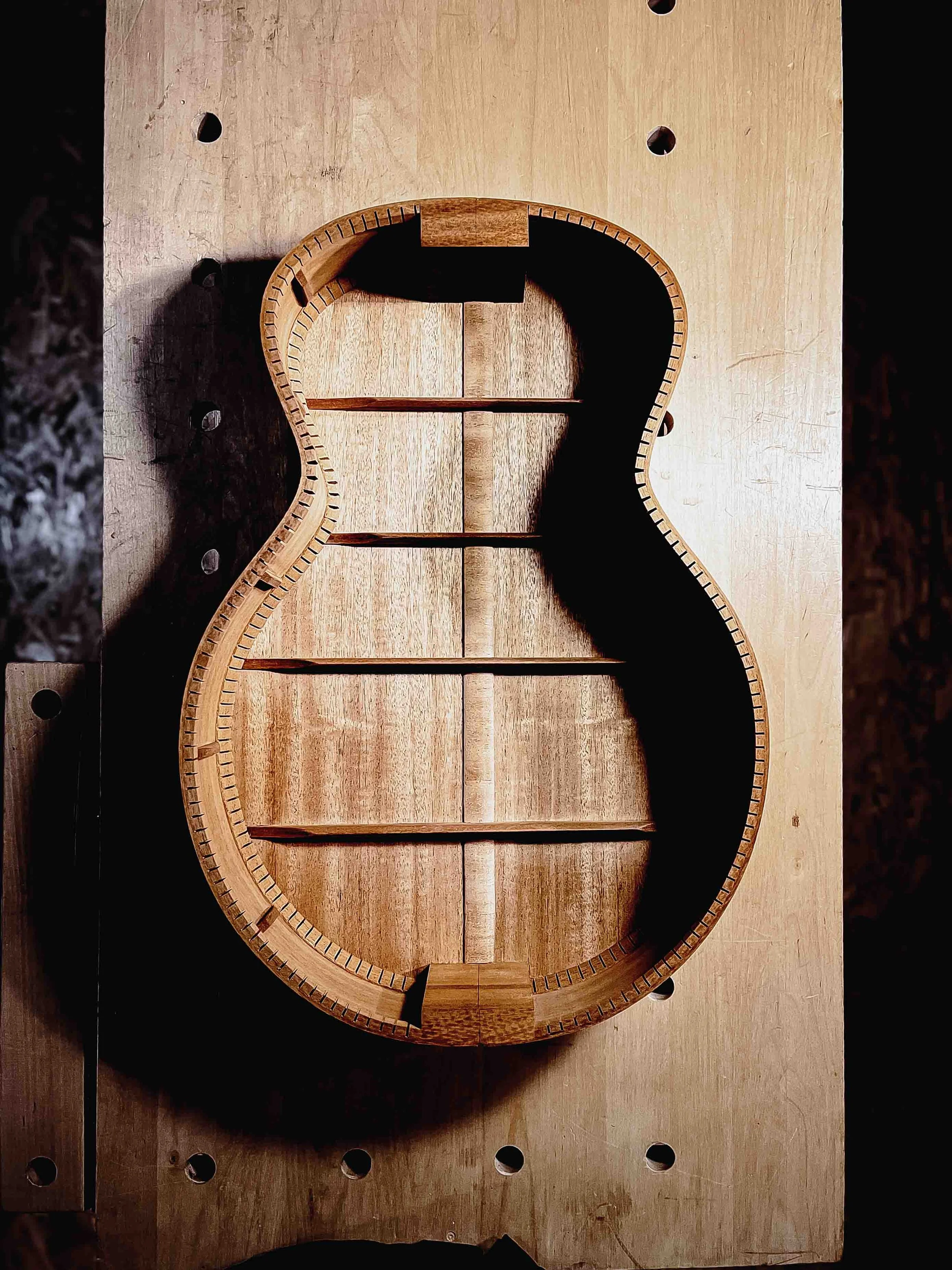
Back in the workshop — a dedicated space in Chesham I've had since September 2025 — the work takes shape slowly and deliberately. I work two to three full days a week, starting early, breaking for breakfast and lunch with my family, and finishing in the afternoon. The pace is intentional. I work mostly with hand tools: hand planes, chisels, scrapers. It's quiet work. It demands focus, and that focus is part of what goes into the instrument. I use power tools occasionally, where they make sense.
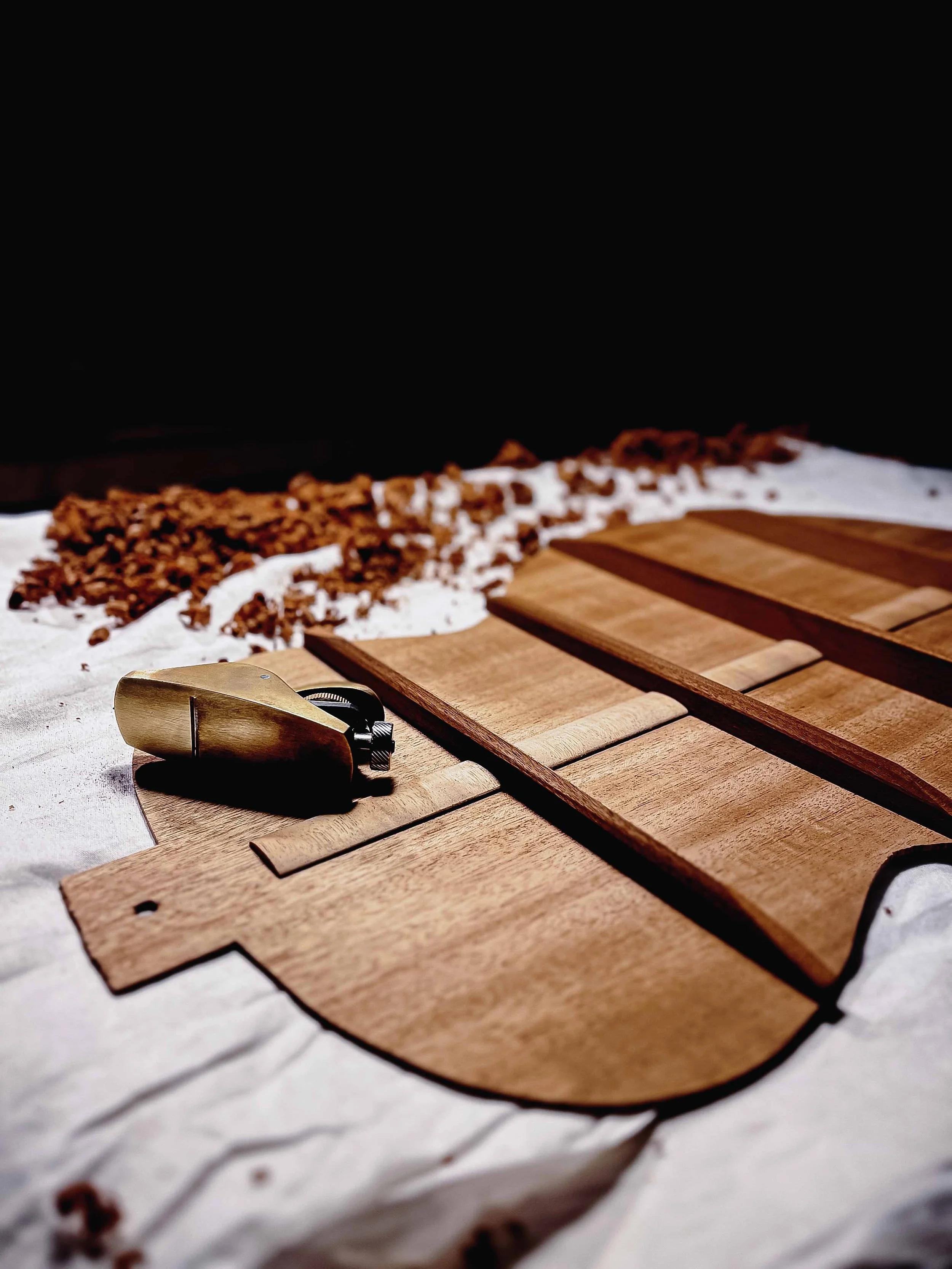
I finish in oil. It protects without sealing, and lets the instrument breathe and age the way wood should.
An instrument is finished when it feels right — when it plays comfortably, resonates freely, and asks nothing of the player that the player shouldn't have to give.
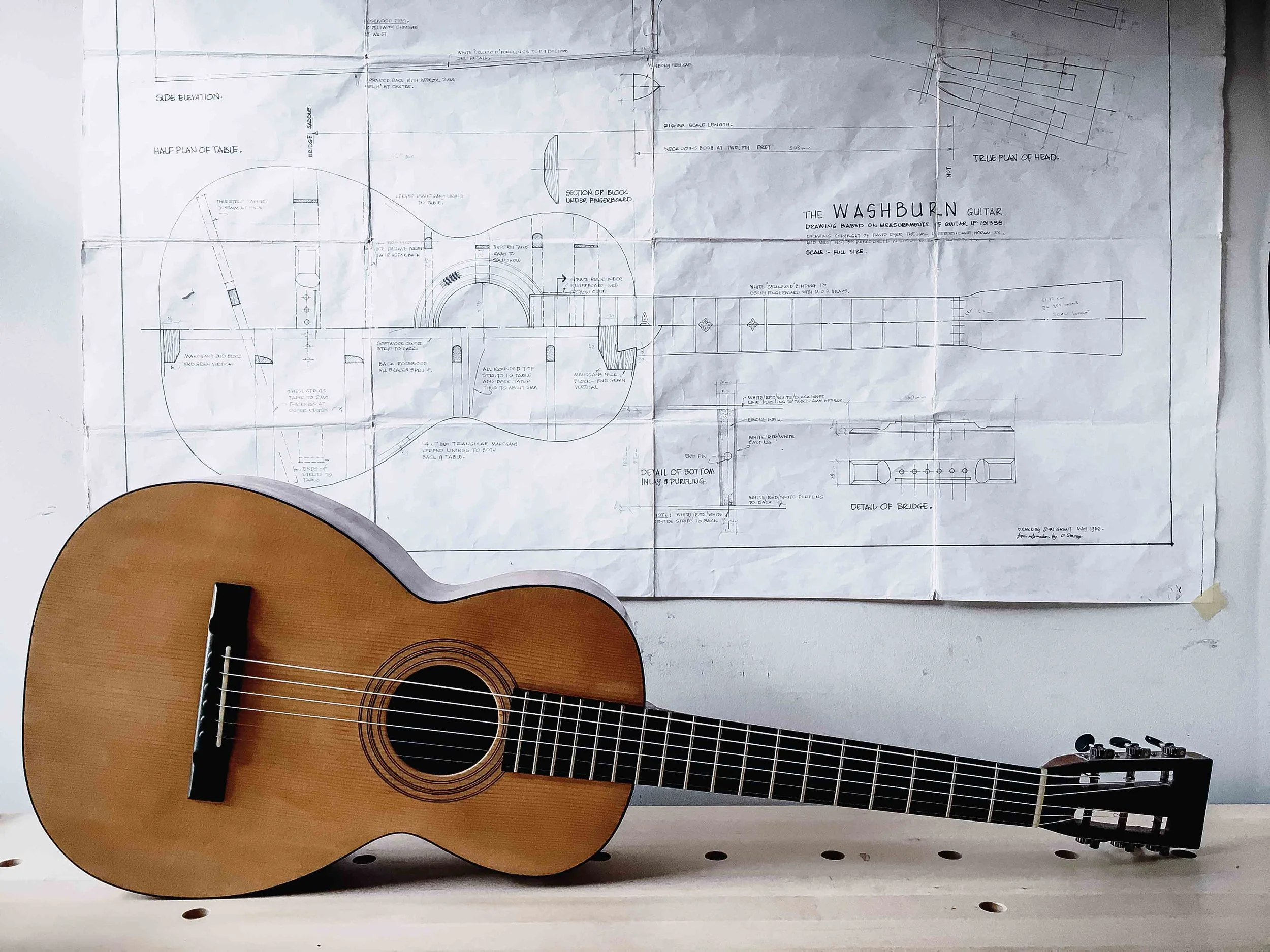
Always in the making