the guitars
Dáda
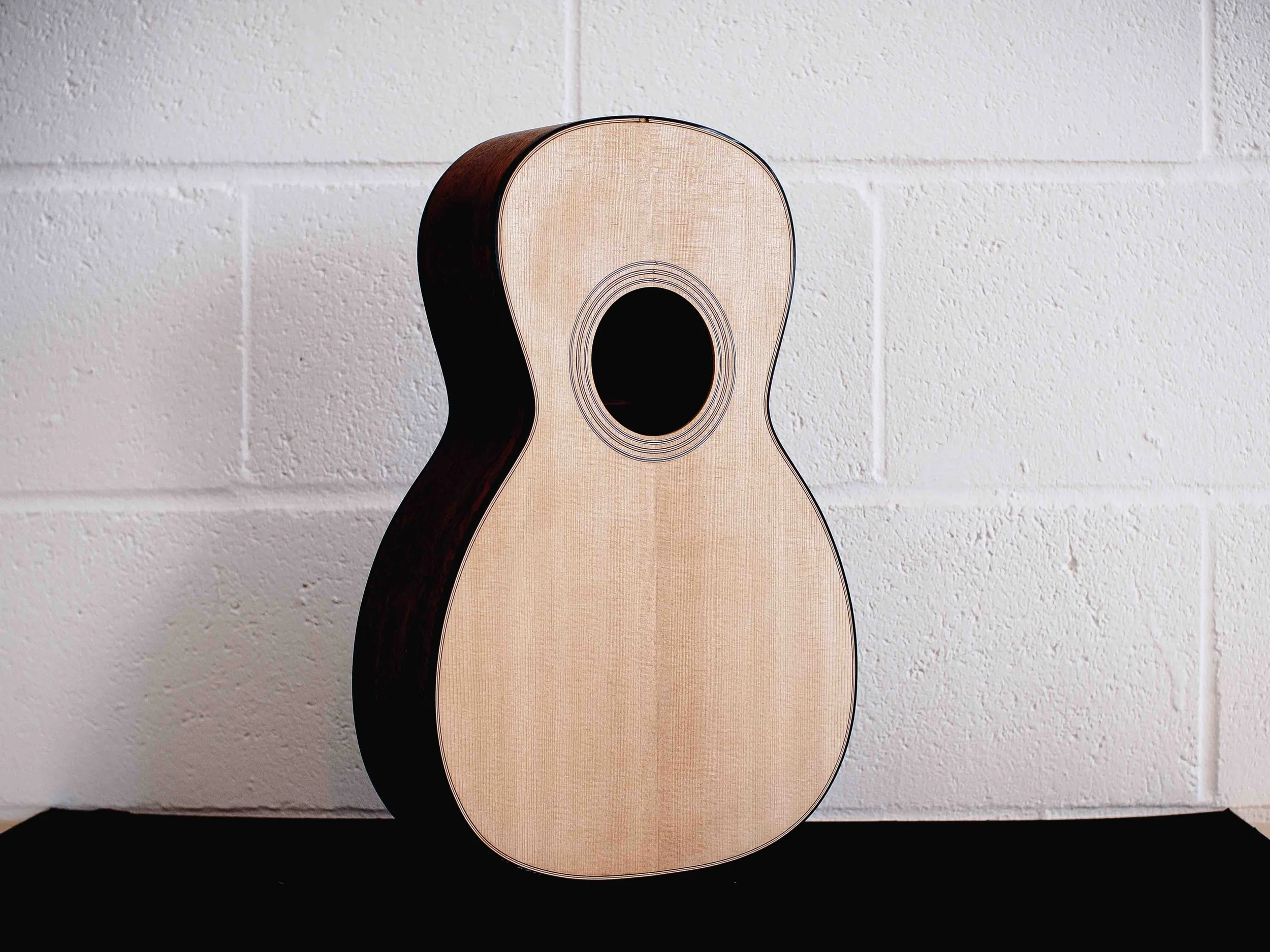
The Dáda is inspired by the parlor guitars of the early 1900s — small in body, but present and purposeful in sound. Built on a 616mm scale with a body that joins at the 12th fret, it has the intimate proportions of its historical forebears, and all the character that comes with them.
Its voice is mid-focused and immediate, with a clarity and presence that draws you in. The pre-war scalloped ladder bracing, not commonly used in modern acoustic guitar building, gives it a distinctly old quality — open, direct, and a little unusual in the best possible way. It rewards players who listen closely.
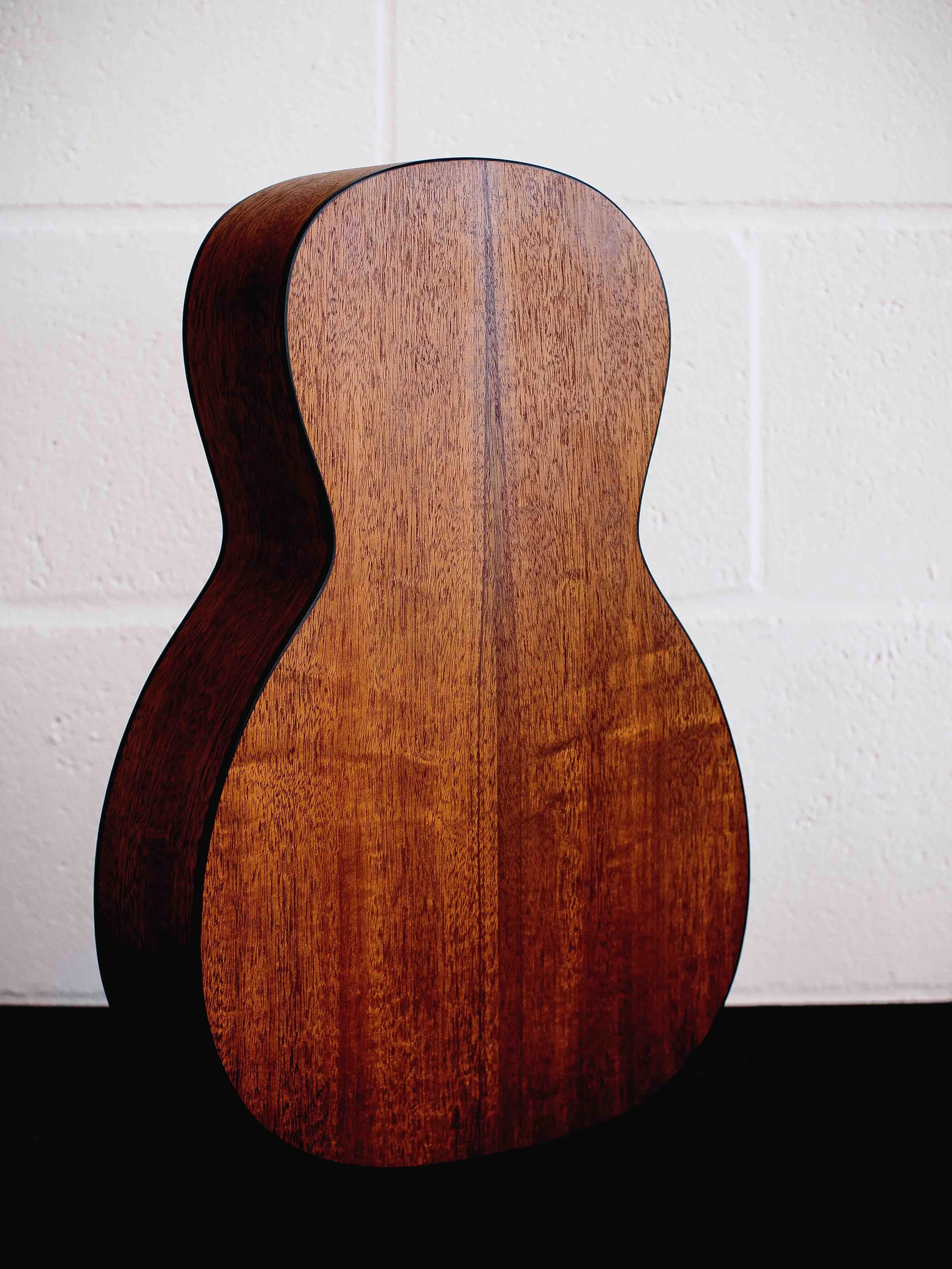
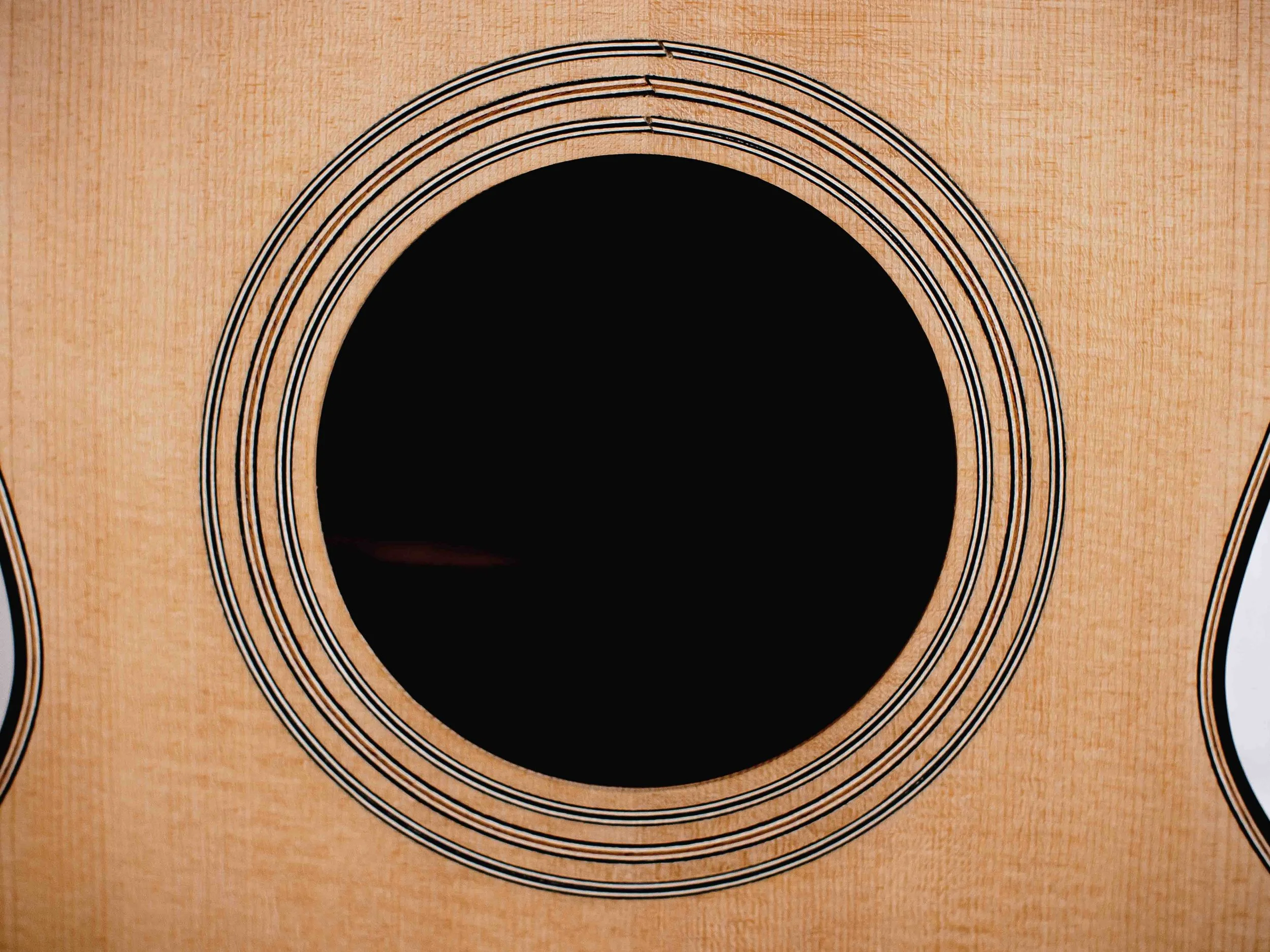
Sitka spruce over mahogany back and sides keeps the sound warm and focused, while the ebony fingerboard, bridge and bindings give it a clean, understated elegance. Bone nut and saddle, Golden Age Restoration tuners, and a custom wood rosette complete an instrument that feels as considered as it sounds.
Built to be played.
Scale Length: 616 mm
Upper Bout Width: 220 mm
Lower Bout Width: 310 mm
Body Length: 455 mm
Body Depth: 100 mm
Full Length: 930 mm
Body Joint: 12th fret
Nut Width: 44 mm
Fingerboard Radius:12"
Ló
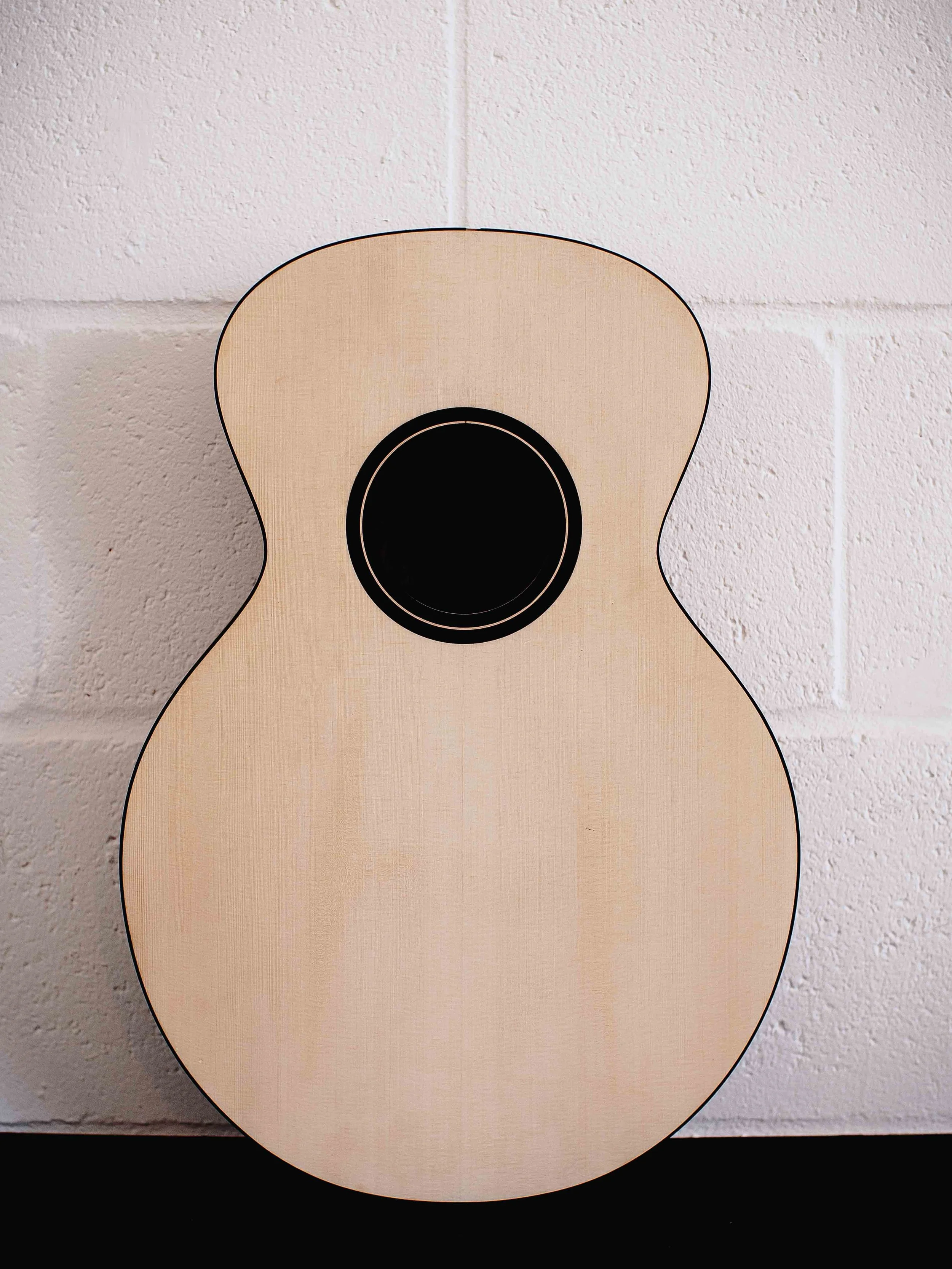
The Ló takes its inspiration from the early Gibson L-0 and L-1 flat-tops of the 1920s — a family of instruments that quietly shaped the course of American music and continues to influence guitar makers and players a century on. Slightly larger in body than the Dáda, it shares the same intimate 12th-fret neck joint and the same philosophy: a small guitar with something meaningful to say.
The Ló is braced with a pre-war scalloped H pattern — the same method used in the very first Gibson flat-tops of 1926, and rarely seen since. It is a deliberate choice, one that connects the instrument directly to its roots and gives it a tonal character all of its own.
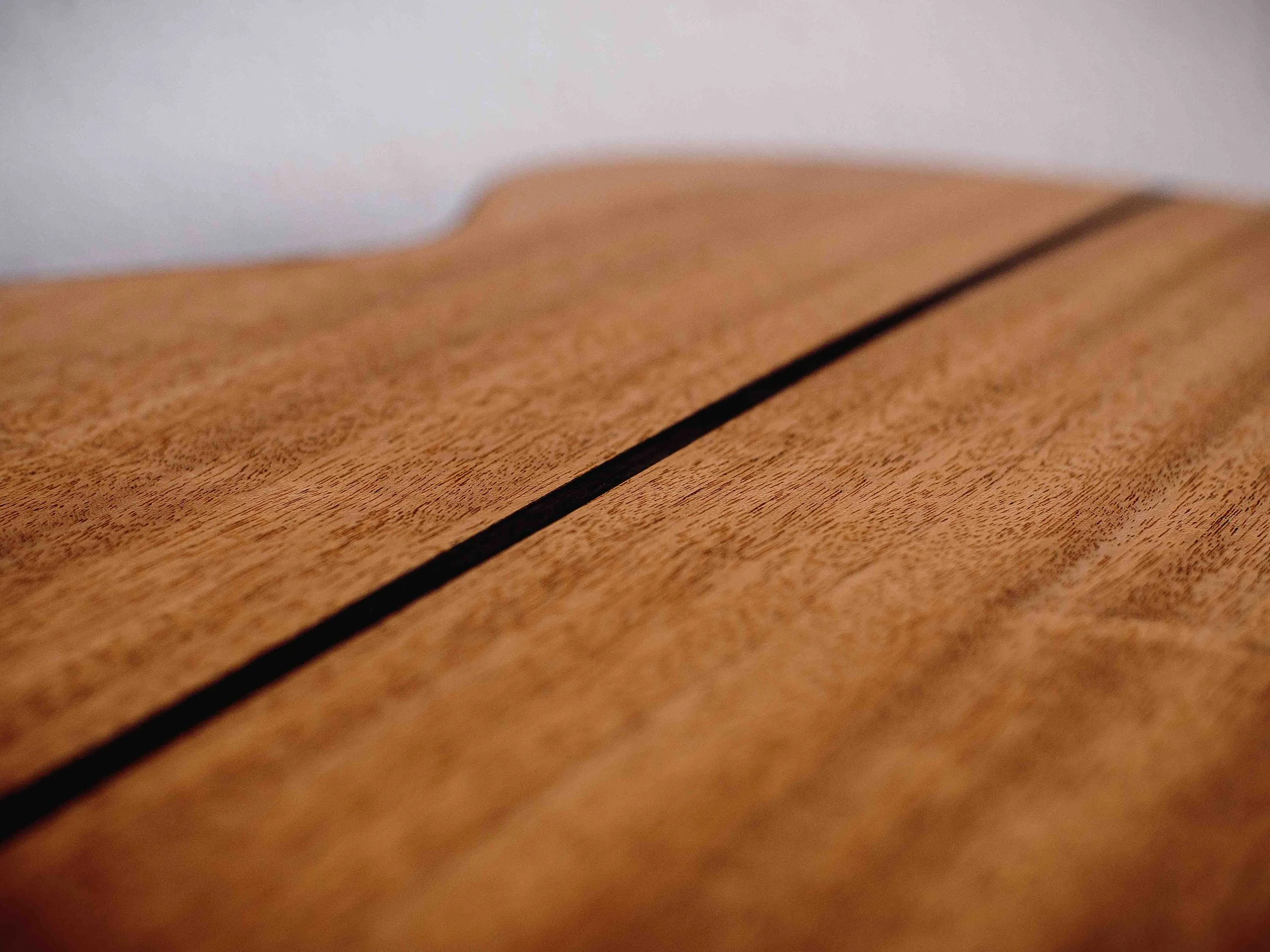
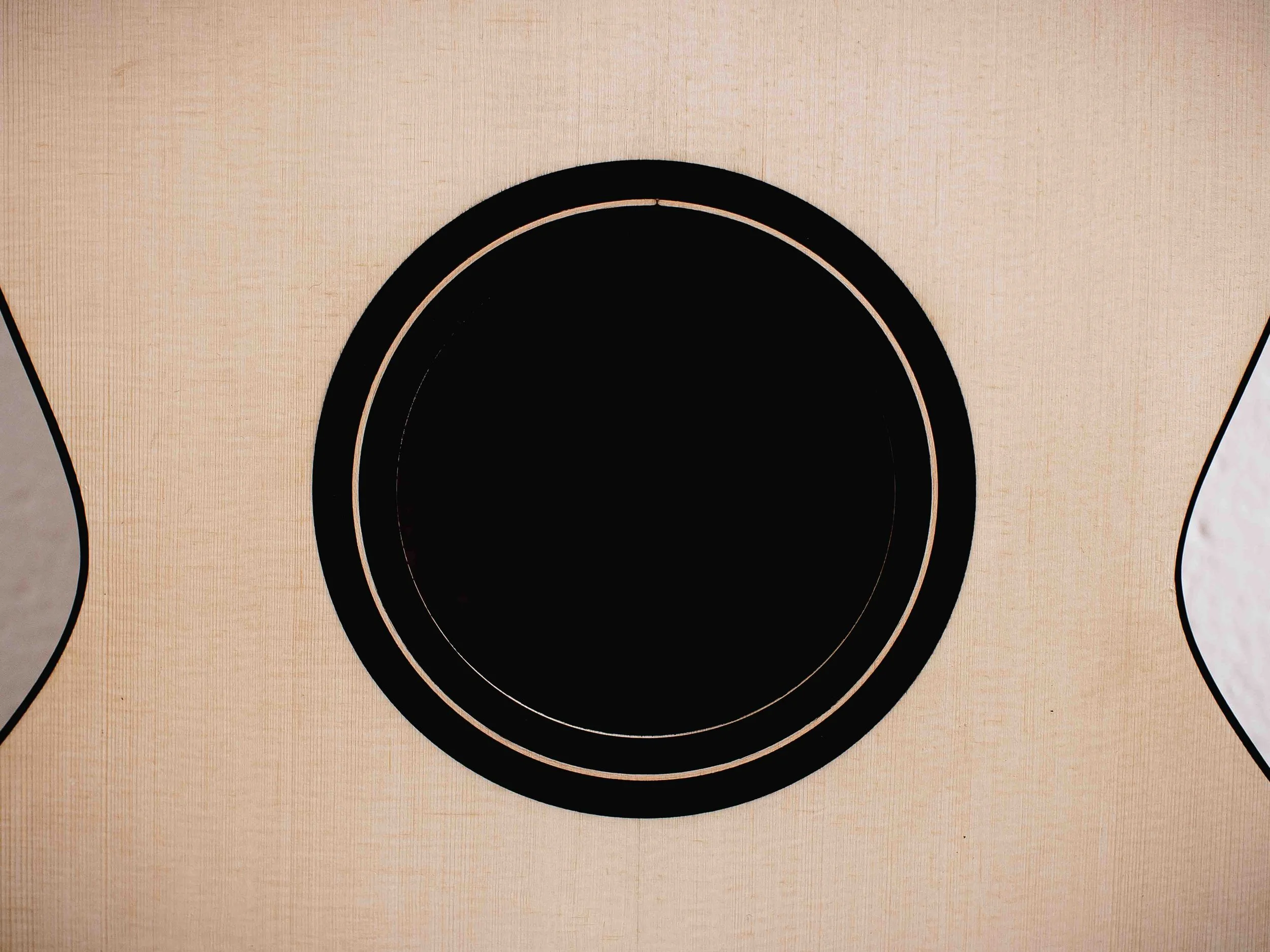
Sitka spruce over mahogany back and sides, an ebony fingerboard, bridge and bindings, bone nut and saddle, and a custom wood rosette make for an instrument that is as considered in its details as it is grounded in history.
Built to be played.
Scale Length: 635 mm
Upper Bout Width: 255 mm
Lower Bout Width: 345 mm
Body Length: 495 mm
Body Depth: 100 mm
Full Length: 1000 mm
Body Joint: 12th fret
Nut Width: 44 mm
Fingerboard Radius:12"